Inside the Archives and Information Services Division (ARIS) at the Texas State Library and Archives Commission in Austin, preserving history is often a race against time powered by scanners, film machines, forensic computers, and enormous amounts of digital storage.
From fragile Civil War-era documents and aging cassette tapes to born-digital government records, ARIS uses a surprising mix of old and new technology to preserve Texas history and make it accessible to the public through the Texas Digital Archive (TDA).
At the center of that work is a simple but urgent reality. Technology changes, and history can disappear with it.
A Race Against Time in the Digitization Lab
Inside ARIS’s digitization lab, history arrives in nearly every format imaginable. “We deal with analog reel-to-reel tape, audiocassettes, motion picture film, about a dozen different video formats, and microfilm,” said Steven Kantner, Digital Assets Archivist and manager of the digitization lab.
The archivists in the lab digitize photographs, negatives, audiocassettes, film reels, maps, documents, and oversized materials so they can be preserved before deterioration, or obsolete equipment makes them inaccessible.
The lab itself feels part archive, part technology workshop. Flatbed scanners capture high-resolution photographs and documents, while a large planetary scanner digitizes oversized materials like maps, ledgers, and architectural drawings without damaging fragile originals. Some records are simply too large to scan in one pass, including giant State Capitol Building and Battleship Texas drawings stretching up to 12 feet long.
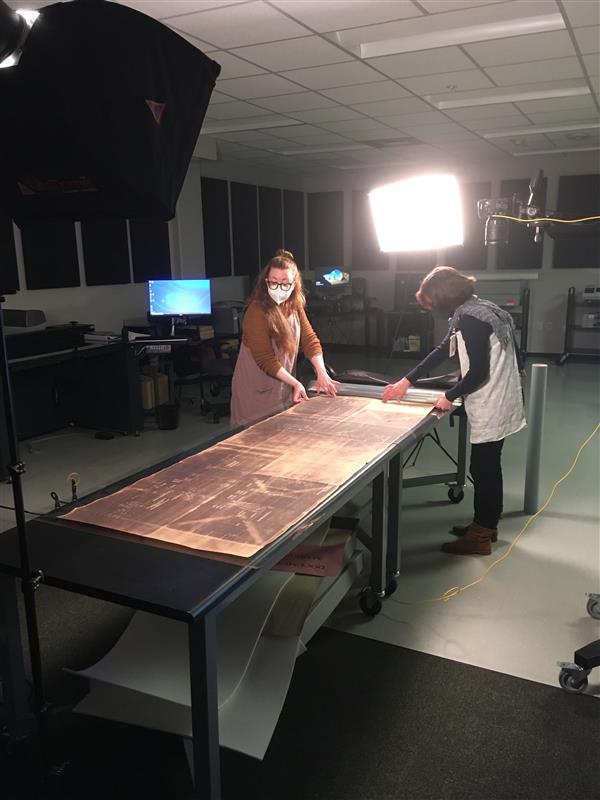
For those materials, staff rely on high-resolution photography, specialized diffused lighting, and photo stitching techniques to digitally recreate the complete image. Sometimes preservation becomes even more hands-on.
Magnetic tapes can absorb moisture or become sticky over time, making playback difficult or impossible. To recover their contents, ARIS staff may carefully “bake” audio and video tapes in a specialized lab oven, temporarily stabilizing them long enough to safely play and digitize them.
The process removes moisture and helps restore the magnetic coating just enough to create a preservation copy. “You’ve got a small window to play it back and capture whatever’s on it,” Kantner explained.
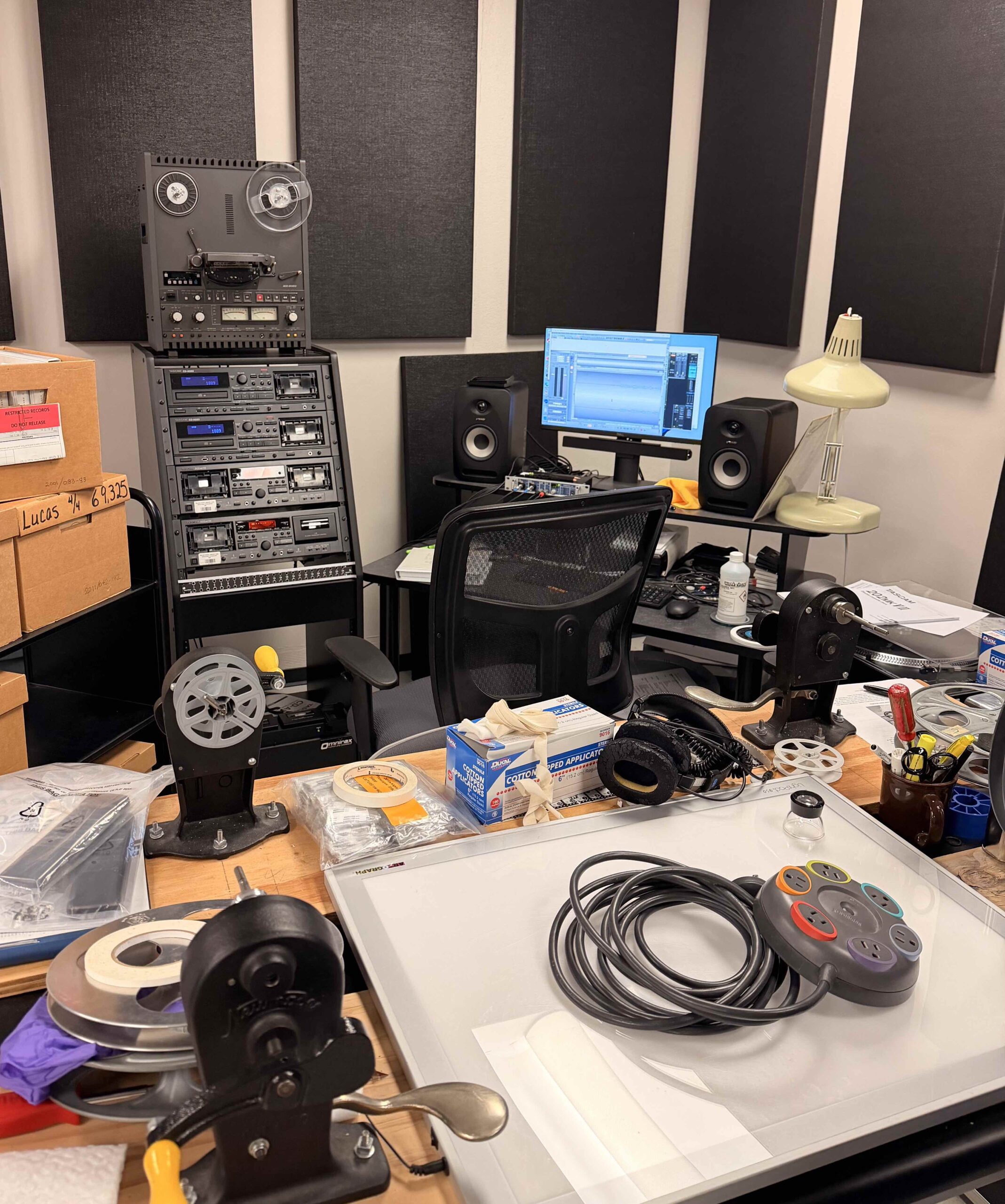
The challenge is not only preserving the media itself but preserving the equipment needed to read it. “Today, audio cassettes and videotapes can still be played. But what about 20 years from now?,” Kantner said.
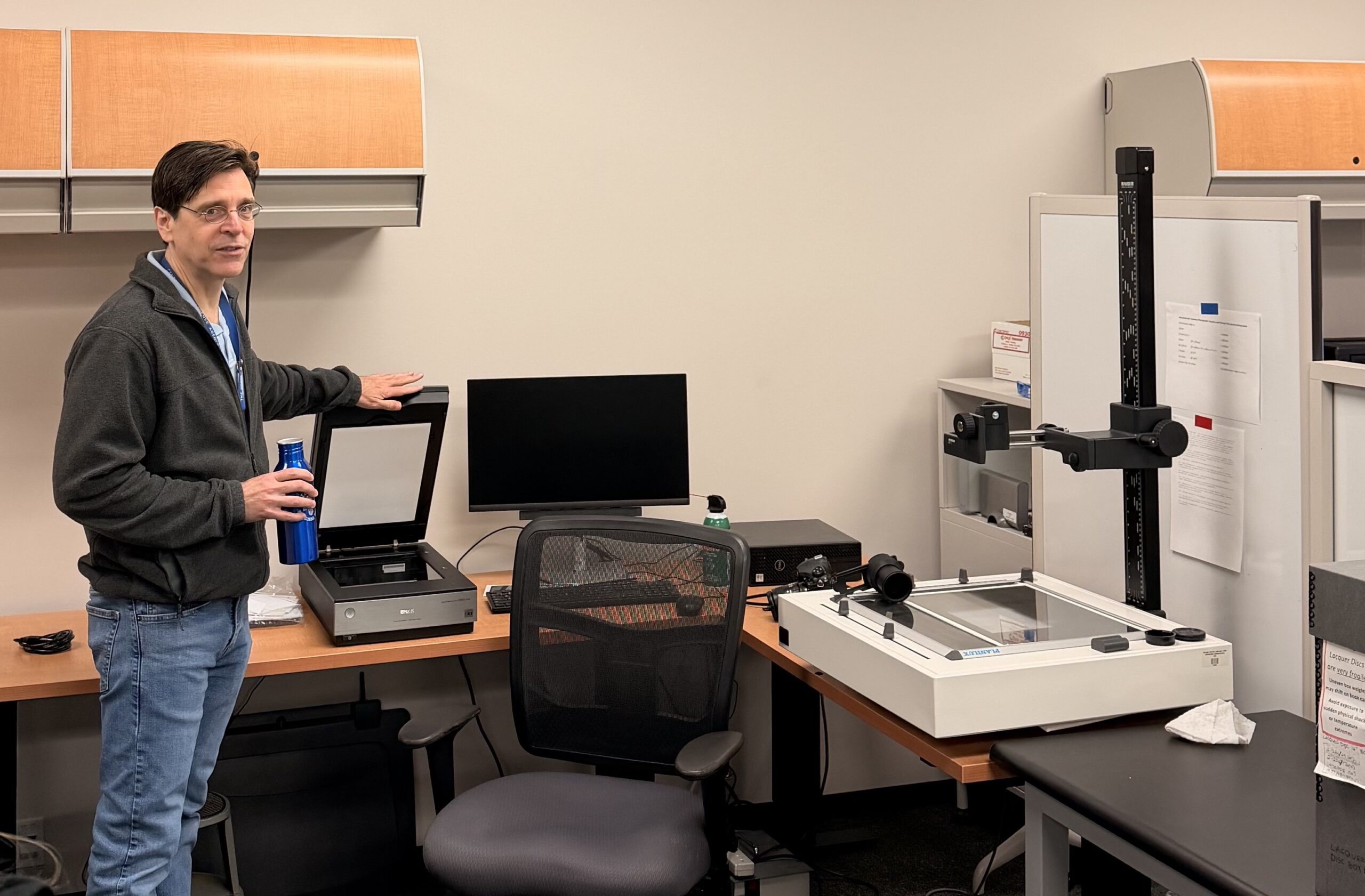
The lab maintains legacy playback equipment for obsolete formats, including a motion picture scanner for 8mm and 16mm film, U-Matic and BetaCam decks, and audiocassette systems. Many contain parts that are increasingly difficult to replace.
“We’re running out of time on some formats,” Kantner explained. “If the equipment disappears, access disappears with it.”
What Gets Digitized?
Not everything can be digitized immediately, which means ARIS staff constantly evaluate priorities.
Three factors often guide digitization decisions:
- Historical value
- Public demand
- Preservation risk
Some materials are at immediate risk because of their physical condition. Battleship Texas ship plans, for example, suffered deterioration after years of humidity exposure. Older paper presents challenges too. Before the Civil War, paper often used cotton rag materials that aged relatively well. Later paper made with wood pulp and acidic compounds became far more fragile over time.
Even ink creates problems. Iron gall ink, common in historical records, can slowly eat through paper. Over time, light will also cause documents and photographs to fade.
The State Archives support documents of all formats, including legal, governmental, and genealogical research, documents that can remain critically important long after they were created. Senate hearing recordings from the 1970s through the early 2000s, legislative audio, court materials, and state agency records continue to hold value for Texans and other state government agencies today, as well as researchers who come from all parts of the United States and other countries
In some cases, preservation work is funded directly by agencies seeking long-term access to records. ARIS has worked with the Texas Department of Transportation (TxDOT) Right of Way Division on transportation records tied to property deeds and eminent domain documentation dating back to the 1800s, helping preserve records that still carry legal importance.
When One Tape Creates Hundreds of Gigabytes
Preserving history also creates an enormous storage challenge. Unlike compressed videos on a smartphone, archival preservation requires extremely high-resolution files designed for long-term quality.
Kantner pointed to one example: the six-hour inauguration coverage of former Texas Governor Ann Richards, recorded across three tapes. Each tape generated roughly 190 gigabytes of preservation data. To put that into perspective, the amount of data being preserved is equivalent to streaming about 1,150 hours of standard-definition video on YouTube, downloading nearly 48,000 songs from Spotify or Apple Music, or snapping over 60,000 high-resolution photos on your smartphone. Given the massive amounts of data, it means preserving history quickly becomes a technology and infrastructure challenge.
Digitized materials are stored across systems called RAID (Redundant Array of Independent Disks) towers, designed with multiple disks acting as one unit so files remain protected even if hardware fails. Multiple copies help guard against corruption or loss.
“There’s a misconception that digital lasts forever,” staff noted. Hard drives fail. CDs degrade. Floppy disks become unreadable. Even digital preservation requires constant monitoring, migration, and management.
Preserving the History That Was Born Digital
While the digitization lab focuses largely on physical and analog materials, another team at ARIS works on records that never existed on paper in the first place.
Mark Myers and Brian Thomas, Electronic Records Archivists, oversee preservation and access through the Texas Digital Archive (TDA), an online portal that gives the public access to preserved Texas records.
The TDA launched in 2015, beginning with records from former Texas Governor Rick Perry. Public access followed in 2016. What began as roughly seven terabytes of records has grown into an enormous preservation system containing roughly 32 million files and around 260 terabytes of storage.
Myers and Thomas focus heavily on “born-digital” material, records that originated electronically rather than being scanned from paper. That can include emails, government files, digital photographs, legislative materials, court-related records, and agency documents transferred to ARIS through retention schedules.
Even with born-digital materials, it’s also a race against time. As Myers explained. “If something can’t be read because it’s an old drive or outdated technology, it can’t be preserved.” Old technology presents familiar problems. Magnetic disks degrade. Floppy disks fail. Software becomes obsolete. Entire operating systems disappear.
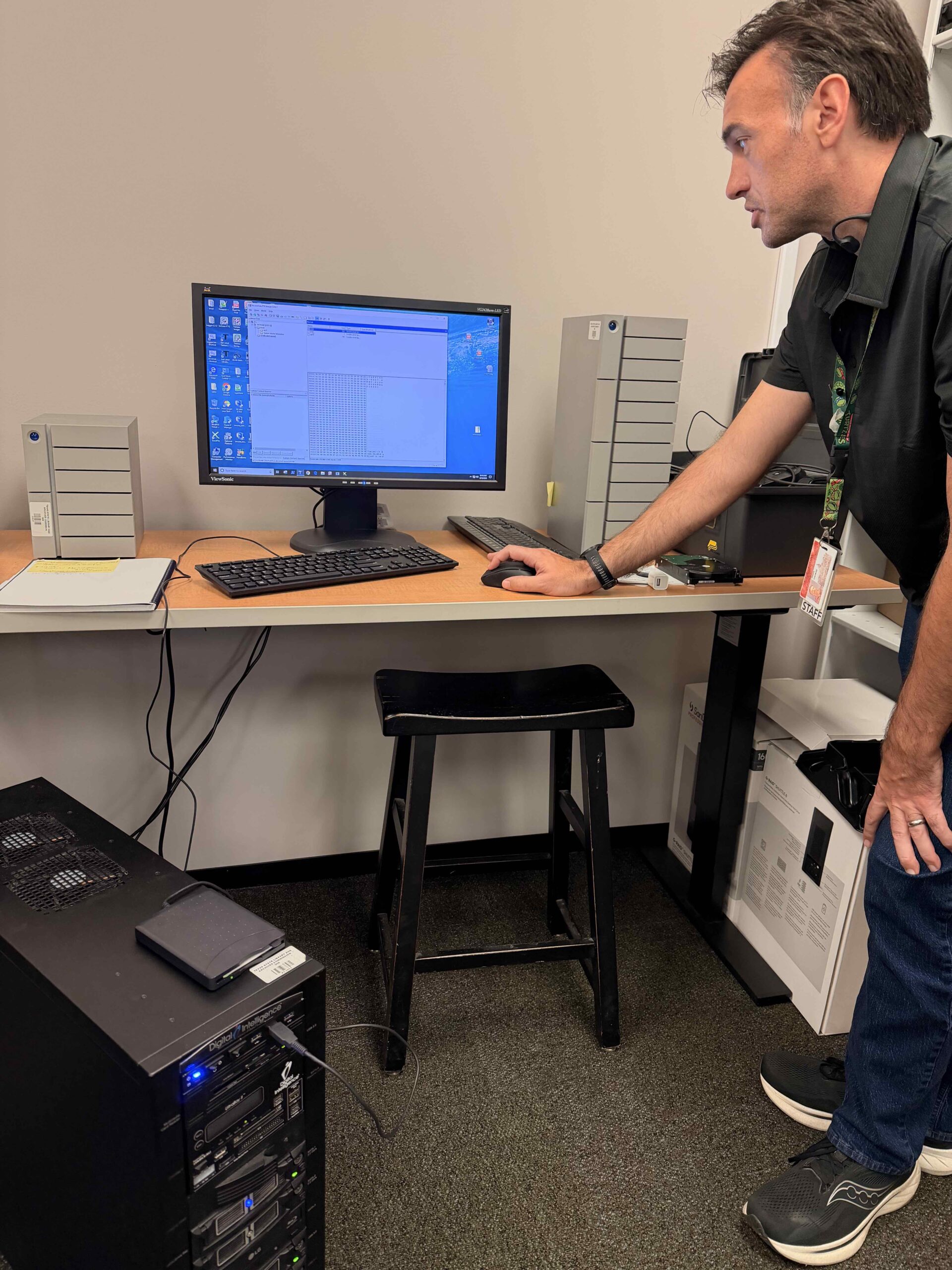
To recover files from aging media, ARIS uses a forensic computer nicknamed “FRED,” similar to technology used in law enforcement investigations. FRED, which stands for Forensic Recovery of Evidence Device, can safely examine materials from obsolete storage systems, read multiple file formats, and recover files from legacy media without accidentally altering or deleting them.
Importantly, FRED stays offline and uses write-blocking technology so original materials cannot be unintentionally changed.
Whether records come from floppy disks, older office systems, or forgotten storage media, the goal remains the same: recover the information before time and technology erase access.
From Preservation to Public Access
Preservation is only half the story. The Texas Digital Archive exists so Texans can actually access these materials. While Kantner, Myers, and Thomas specialize in handling the technology, part of their job is getting the records into a format that allows other ARIS archivists to access them, add descriptions, and sort them in the TDA.
Using the digital preservation platform Preservica, ARIS catalogs records, assigns digital fingerprints known as checksums, and continually verifies files to ensure nothing has changed or degraded over time. If a file becomes corrupted, systems can flag the issue.
The archive also preserves multiple versions of many records: a high-quality preservation copy for long-term safekeeping and a compressed presentation copy optimized for public access online. That means someone researching genealogy, state government, legislative history, transportation records, or historical events can often access materials without making a trip to Austin.
Behind every preserved document, photograph, audio recording, or video, ARIS archivists bring technical expertise, resourcefulness, and vigilance to ensure the preservation, discoverability, and accessibility of their digital archival holdings.
As State Archivist and ARIS Director, Jelain Chubb, puts it, “this work is central to TSLAC’s mission. We are preserving these archival records so that they can be used and appreciated Texans now and long into the future.”

