Texas libraries are stepping up to meet an essential community need: access to healthcare. Thanks to innovative partnerships and funding, telehealth pods are now offering rural residents a lifeline to critical medical services. This groundbreaking project highlights how libraries continue to evolve as pillars of their communities, offering resources far beyond books.
The Power of Partnerships
The Center for Public Health Policy and Practice (CPHPP) at the Texas Department of State Health Services (DSHS) played a pivotal role in bringing telehealth pods to life for one small Texas public library. DSHS received funding from the Centers for Disease Control and Prevention (CDC) to address health disparities exposed by the COVID-19 pandemic, focusing on areas where access to medical care is most challenging. Regional CPHPP staff served as a “switchboard” to foster partnerships and build a community coalition in deep East Texas that helped the library secure philanthropic funding to implement this program.
“Cross-sector partnerships are key. No one agency or organization can break down barriers to accessing care alone,” Jessica Hyde, director of the Public Health Partnership Advancement Section of CPHPP explained, emphasizing the collaborative effort needed to connect healthcare providers with library patrons.
Crockett Public Library’s Telehealth Pods
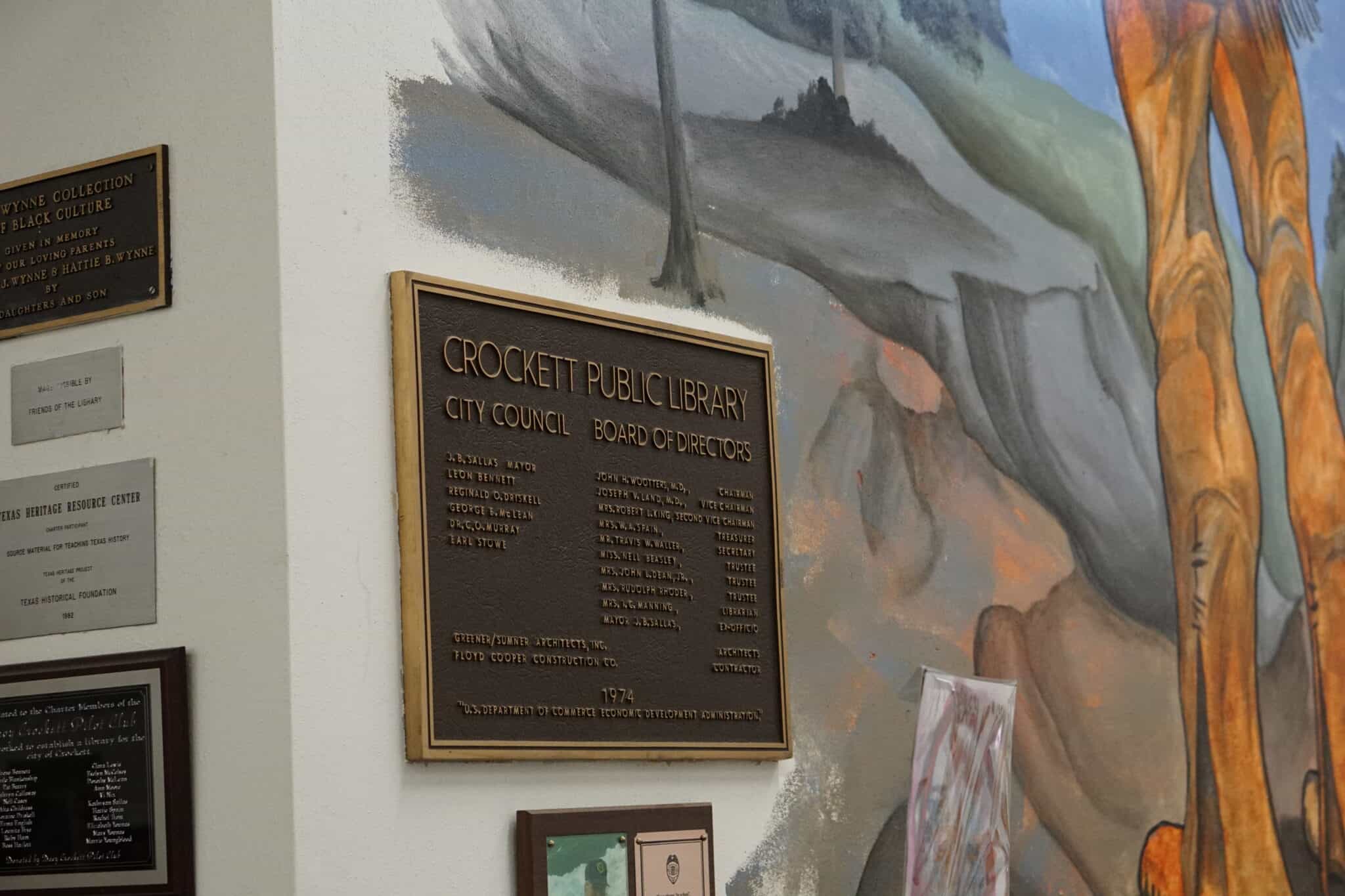
The partnership resulted in the installation of three new telehealth privacy pods in the J.H. Wootters Crockett Public Library through a grant from the TLL Temple Foundation. The pods provide a private space for community members to engage in telehealth visits, zoom meetings, or live online courses, according to Library Director Judy Scott. Each pod is equipped with a Microsoft Surface Pro, but individuals can bring in their own devices. They offer a secure space for patrons to connect with doctors and specialists–services often out of reach in rural towns.

Crockett is a small town, population 6,286, in Houston County, Texas, on the edge of the Davy Crockett National Forest. The community is hours away from other metropolitan areas and faces significant barriers to healthcare access, with few medical providers and long travel times to the nearest specialists.
“The library has seen an uptick in usage [since the pods were installed],” Jessica shared. “We were ecstatic to hear that veterans are now using the pods for their telehealth visits, showing how valuable this resource has become.”
For Jessica, this project strikes close to home. Growing up in rural Northeast Texas, she experienced firsthand the challenges of limited internet access. The county library was her go-to place for online resources to help her with homework as a teen, a memory that fuels her passion for ensuring others have access to essential services.
Libraries as Health Hubs
This initiative showcases the evolving role of libraries as community hubs. Beyond telehealth, libraries are promoting wellness and increasing health literacy by hosting community health fairs or providing resources like Healthier Texas, a non-profit program which offers free health coaching. Libraries can also become nature-smart by promoting programs like Texas Children in Nature Network’s Library Explorer Adventure Packs (LEAP) initiative. Such efforts aim to empower residents to take proactive steps toward better health.
Of course, launching a project of this scale comes with its challenges. Delays in shipping and installing the telehealth pods caused some initial setbacks. But these hurdles were overcome, and the program officially launched in June 2024, with a grand opening and ribbon-cutting ceremony in August.
The library is tracking pod usage and the types of services accessed, providing valuable insights for future initiatives.
When asked how she plans on getting the word out about the telehealth pods, Jessica had this to say. “What was great about the coalition was having a variety of voices at the table, including healthcare providers. They know about the pods. They tell their patients about it. When you need a connection to a specialist who is not in the area, doctors can make their patients aware of this resource [at the library]. Of course, there was local news coverage at the ribbon-cutting, too. And as people come in and see them, that’s another opportunity to increase awareness.”
Advice for Libraries Interested in Telehealth
Jessica encourages libraries interested in telehealth to start by building local partnerships. “Healthcare providers are often a trusted source of information in a community and can be your biggest supporters,” she said. “By spreading the word among their patients, these providers help bridge the gap between libraries and those who need telehealth the most.”
As these telehealth pods demonstrate, libraries are uniquely positioned to address community needs creatively and effectively. From providing access to healthcare to fostering partnerships that strengthen communities, they remain at the forefront of innovation and service.
This program is more than just a response to a need—it’s a testament to the resilience and ingenuity of Texas communities. Libraries aren’t just places to borrow books; they’re spaces where lives can change.
If your library is facilitating telehealth visits, let us know! We’d love to hear about it. If you want to learn more about telehealth and digital opportunities in libraries, check out LDO’s library telehealth resources or subscribe to our newsletter.

