For many people, technology can remove barriers and make everyday tasks easier. But finding the right technology, and getting a chance to try it before investing in it, can be a challenge. That’s where libraries can play an important role.
In Pottsboro, the public library (service population 4,150) has partnered with the Texas Technology Access Program (TTAP), from UT Austin’s Texas Center for Disability Studies, to become one of their Assistive Technology Demonstration Sites, giving community members a place to see, explore and try a variety of tools designed to increase accessibility and independence.
“The library is the sole tech hub in town,” said Renee Nichols, director of the Pottsboro Library. “There’s nowhere else to go for low cost printing, free access to public computers and Wi-Fi.”
Now, that role includes helping community members discover technology they may not even know exists.
What Is Assistive Technology?
Assistive technology, or AT, can be almost anything that helps someone complete a task more easily or independently. Assistive technology can even be built into devices people already use every day.
“AT can be anything that helps a person with a task,” said Anna Gonzalez, an assistive technology specialist with TTAP. “It can range from adaptive keyboards to communication devices to a simple 3D-printed zipper pull or magnifying glass.”
That broad definition is part of what makes the partnership so valuable. People don’t necessarily have to identify themselves as having a disability or know exactly what kind of technology they need. They can simply come to the library, ask questions and explore options.
From a Small Display to a Community Resource
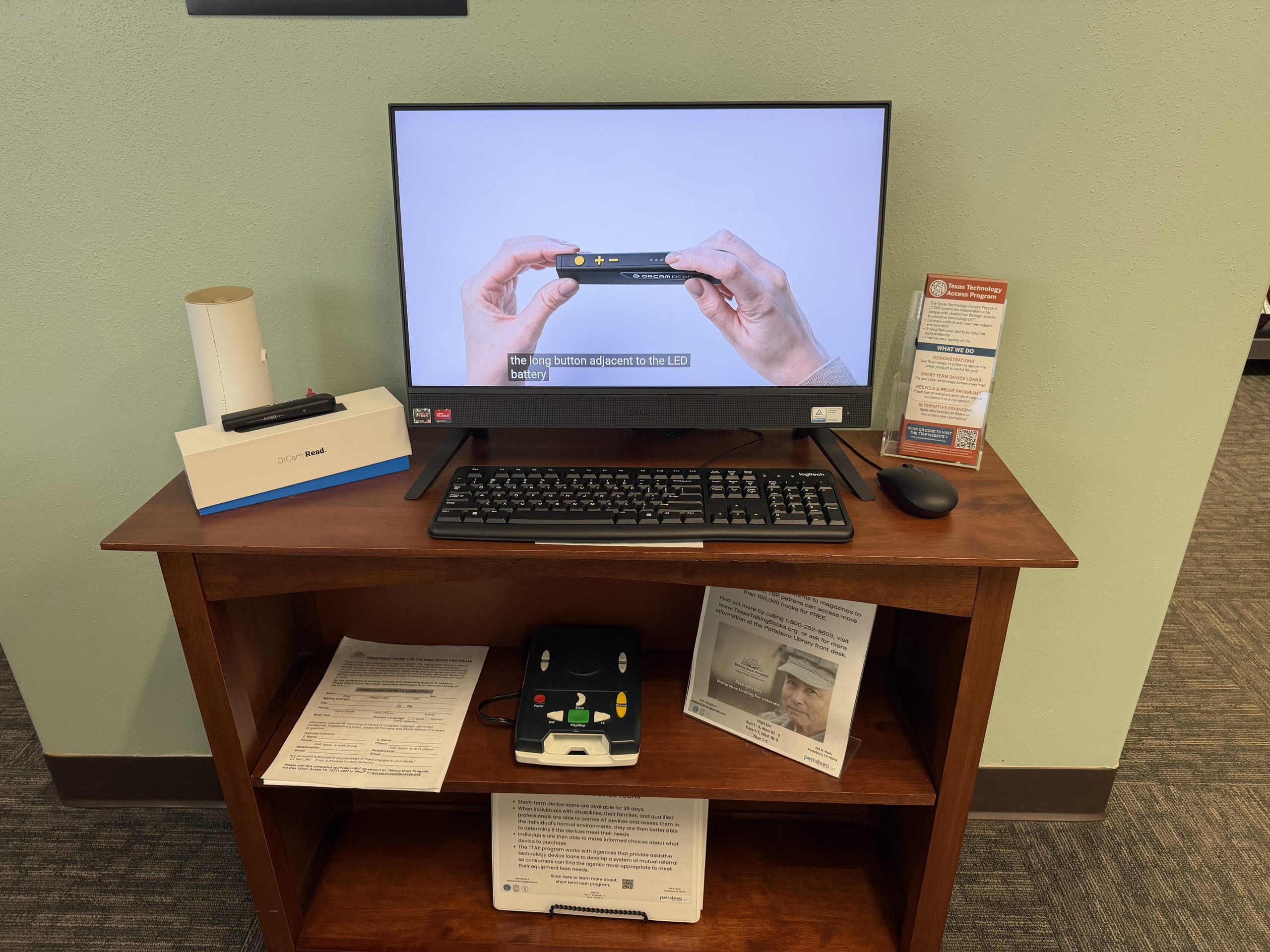
The Pottsboro Library began its partnership with TTAP about three years ago. The library initially displayed about 20 devices near the front desk, giving patrons an opportunity to see examples of assistive technology as they went about their normal library visits. The collection has since grown to about 50 items and moved into the library’s office space.
The devices cover a range of needs, including vision, hearing, mobility and communication. The library highlights a different device each month, often playing a manufacturer’s YouTube video nearby the featured device so visitors can learn more about how it works.
The library also incorporates assistive technology into its programming. Nichols has taught a class about accessibility features built into smartphones, including tools that can help people hear better, magnify their screens or receive alerts. She has also demonstrated devices such as a high-contrast keyboard and other adaptive tools.
For Nichols, the experience of partnering with TTAP has been a learning opportunity too.
“When I first got involved, I knew nothing about accessibility,” Nichols said. “I’m always surprised at how much assistance is out there that people don’t know about.”
That may be one of the most important functions of a demonstration site: helping people discover options they didn’t know existed.
A Partnership That Extends Beyond the Library
TTAP, which is housed at The University of Texas at Austin’s Texas Center for Disability Studies, works to increase awareness, access and use of assistive technology throughout Texas. The program provides demonstrations, device loans, training, information and assistance, financing resources, and other services.
A statewide network of demonstration centers gives Texans opportunities to try devices and learn how they work. TTAP also operates a loan library, allowing anyone living in Texas to borrow assistive technology to determine whether a particular device meets their needs before purchasing it. For certain complex devices, an appropriate professional, such as a speech-language pathologist (SLP), might need to be involved since they have the expertise needed to appropriately support those devices.
Pottsboro is currently the only library in TTAP’s demonstration-center network, making the partnership a unique example of how public libraries can connect their communities with specialized resources.
The relationship also works in both directions. Nichols regularly shares information about TTAP’s loan program with organizations throughout Grayson County, including nonprofits, senior centers, and assisted living facilities.
That community outreach can help people who might benefit from assistive technology find their way to resources that otherwise might be difficult to locate.
“Libraries are already good at connecting people with technology and information,” Gonzalez said. “AT can be a big part of that.”

Libraries Don’t Have to Be the Experts
One of the most important messages Gonzalez wants librarians to hear is that becoming an assistive technology resource doesn’t mean becoming an assistive technology expert.
TTAP provides training and support, and librarians already possess many of the relationships and skills needed to make these resources useful: understanding their communities, connecting people with information, and helping patrons learn how to use technology.
“We don’t expect librarians to become AT specialists,” Gonzalez said. “They know their community. We provide the training.”
That makes the library an ideal entry point. A patron may not know the name of a device, understand what type of technology might help or even realize that a solution exists. Trusted library staff can help start the conversation and connect the patron with TTAP or other resources when more specialized assistance is needed.
A Model for the Library as a Community Hub
For the Pottsboro Library, assistive technology is one more example of how libraries can respond to the specific needs of their communities.
The library has already embraced technology through public computers, Wi-Fi, technology classes, telehealth resources and other services. Its TTAP partnership builds on that foundation by making emerging and adaptive technologies more visible and accessible to the people who live nearby.
It also demonstrates the value of partnerships. A small library doesn’t have to build an assistive technology program from scratch. By working with TTAP, Pottsboro can provide its community with access to specialized knowledge, devices and resources while still tailoring the experience to local needs.
For other libraries considering a similar partnership, Nichols recommends taking a practical look at the library’s space, staff capacity, programming and community needs. And for libraries that aren’t sure where to begin, Gonzalez has an even simpler recommendation: reach out.
“You don’t need to have a clear picture of what you need,” she said. “We can talk about your community to find out what might be right for you.”
That may be the most important lesson from Pottsboro’s experience. Libraries don’t have to have every answer. Sometimes their greatest value is being the place where people can ask the question, try something new, and discover that a solution is closer than they thought.
Libraries interested in learning more about becoming a TTAP Demonstration Center can contact TTAP at (512) 232-0740. More information about TTAP’s statewide Demonstration Center network is available at their website.
