On any given day at Silsbee Public Library, a tutor might be helping a student prepare for an exam while, just a few feet away, someone attends a telehealth appointment, interviews for a new job, or joins a work meeting. It’s all happening in two privacy booths purchased through a Library Infrastructure Facility Improvement (LIFI) Grant from TSLAC. They have become some of the library’s most sought-after resources.
Located about 30 minutes north of Beaumont, the East Texas library serves a close-knit community where access to quiet, private workspace is often difficult to find. Since installing the booths, Library Director Cathy Johnson has watched them become an essential resource for everyone from students and tutors to remote workers, parents, and older adults accessing healthcare.
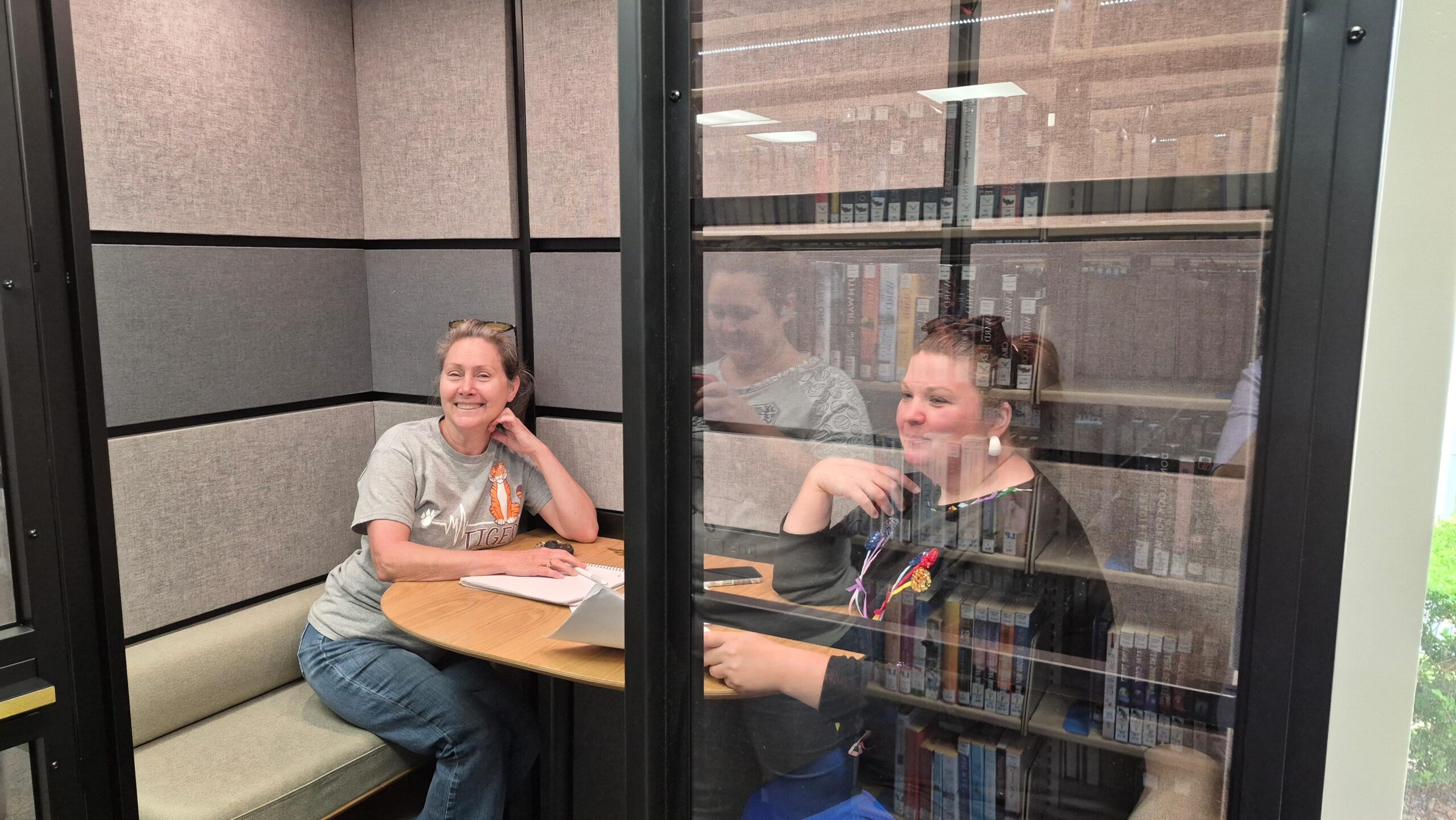
“We had no idea how well received our booths would be in our library,” Johnson said. “We have people studying for college courses, tutors reserving them daily to work with their kids, a mom who just needed some peace and quiet away from her crazy life, a local preacher uses the booths to write his sermon, people who don’t have a physical office for their job can use the booths to communicate with their customers in a quiet area. The word has spread that we have the booths and people are recommending them to others.”
It’s exactly the kind of community impact the LIFI Grant program was designed to create: helping libraries invest in infrastructure that expands services and improves quality of life for the people they serve.
More Than Just a Study Room
Before learning about the LIFI Grant opportunity, Johnson had already been researching privacy booths. She recognized a growing need in her community for quiet, dedicated spaces where patrons could participate in virtual appointments, tutoring sessions, and remote work.
The grant made that vision possible.
Today, the two booths are booked regularly. Tutors reserve them throughout the summer. College students use them for coursework. Remote employees conduct business meetings without distractions. Residents preparing for interviews or online testing have a professional environment available right inside the library.
The demand has become so consistent that the library encourages patrons to reserve time in advance.
Johnson said one of the biggest surprises has been how many people using the booths weren’t regular library visitors before.
“A lot of the people were not even library users,” she said.
The booths have introduced new community members to everything else the library offers, turning a single service into a gateway for deeper engagement.
Supporting Education at Every Age
Education has become one of the most common reasons patrons reserve the booths.
Tutors often work one-on-one with elementary students, while college students use the quiet environment to study, complete assignments, or participate in virtual classes.
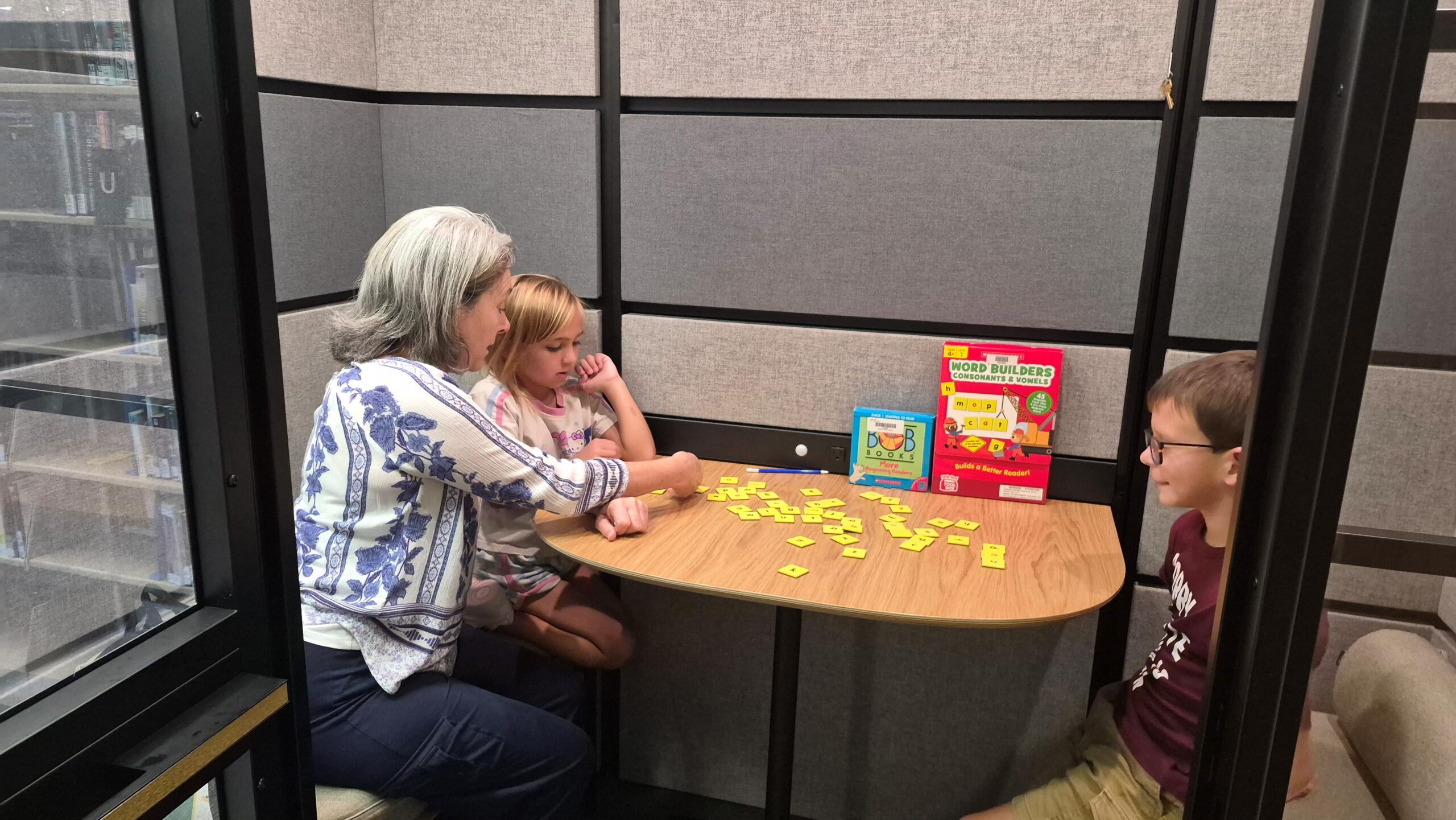
One local educator described how much of a difference the booths have made:
“The study booth has been an asset for me as an educator. It makes it convenient for my clients to meet and drop off or stay at a local location that is safe and close.”
“It makes it easier for me to set up and have my lessons ready without interruptions.”
Another tutor shared that the quiet environment benefits students just as much as instructors:
“Teaching in the booth has helped my students not only concentrate and stay focused, but feel important and stay on task due to the total quiet concentration environment.”
For college students balancing work and family responsibilities, the booths provide something equally valuable: uninterrupted focus.
“As a college student and full-time mom the booth has been a life saver,” one patron shared. “It gives you the quiet environment you need to reset.”
Improving Access Beyond the Library
While education drives much of the demand, the booths have also expanded access to healthcare, employment, and essential services.
Before the booths arrived, telehealth appointments were often held in the library’s meeting room. Although functional, the larger space created echoes and lacked the privacy many patrons wanted.
The booths solved that problem.
Johnson said many older adults now use them to meet virtually with doctors and caregivers in a quiet, comfortable environment. With the nearest major hospital in Beaumont, the booths make it much more convenient for patrons to prioritize their health. As one patron pointed out, “the booth has been financially beneficial for the community because they can meet with their doctors through zoom meetings rather than worrying about fuel cost to make the drive.”
The booths are also used for business meetings, job interviews, remote work, and even sermon preparation. Staff manage reservations with a simple policy, escort patrons into the booths, and maintain security through existing library cameras.
Johnson has also begun discussing future partnerships with local organizations, including the health department and school district, which could use the booths for specialized testing or virtual services.
An Investment That Continues to Grow
Like any new facility improvement, the installation wasn’t entirely without challenges. One booth experienced an electrical issue shortly after installation, but the manufacturer quickly coordinated with a Houston-area contractor to replace the faulty component.
Since then, the booths have operated smoothly, and the response from patrons has only continued to grow.
Johnson plans to begin collecting formal surveys from users, but the feedback she’s already received paints a clear picture. “The booths have made a huge impact on our community,” she said.
Sometimes the greatest impact doesn’t come from the biggest project. In Silsbee, two quiet booths have become places where students learn, businesses operate, healthcare becomes more accessible, and community members find the focus they need to succeed. For a small-town library, that’s a remarkable return on a single infrastructure investment.
