For many older adults, technology has become unavoidable. Doctor’s appointments are booked online. Government forms are digital. Job applications require computer skills. Even staying connected with family often means learning how to navigate smartphones, email, and video calls.
For libraries, helping patrons build these skills has become just as important as helping them find books.
The challenge, however, is that many libraries don’t have the staff, funding, or technology expertise to create comprehensive digital literacy programs on their own.
That’s why partnerships matter.
At the Martindale Community Library, a small 880-square-foot library in Caldwell County, partnerships have transformed what was once an overwhelming hurdle into one of the library’s most impactful services.
Meeting a Growing Need
Library Director Carol Deviney first recognized the need during the COVID-19 pandemic.
“When COVID hit, nobody wanted to come into the library,” she said. “But people still needed doctor’s appointments. They still needed help.”
Residents regularly visited the library because they couldn’t navigate online healthcare portals or complete basic digital tasks. Many older adults simply didn’t know where to begin.
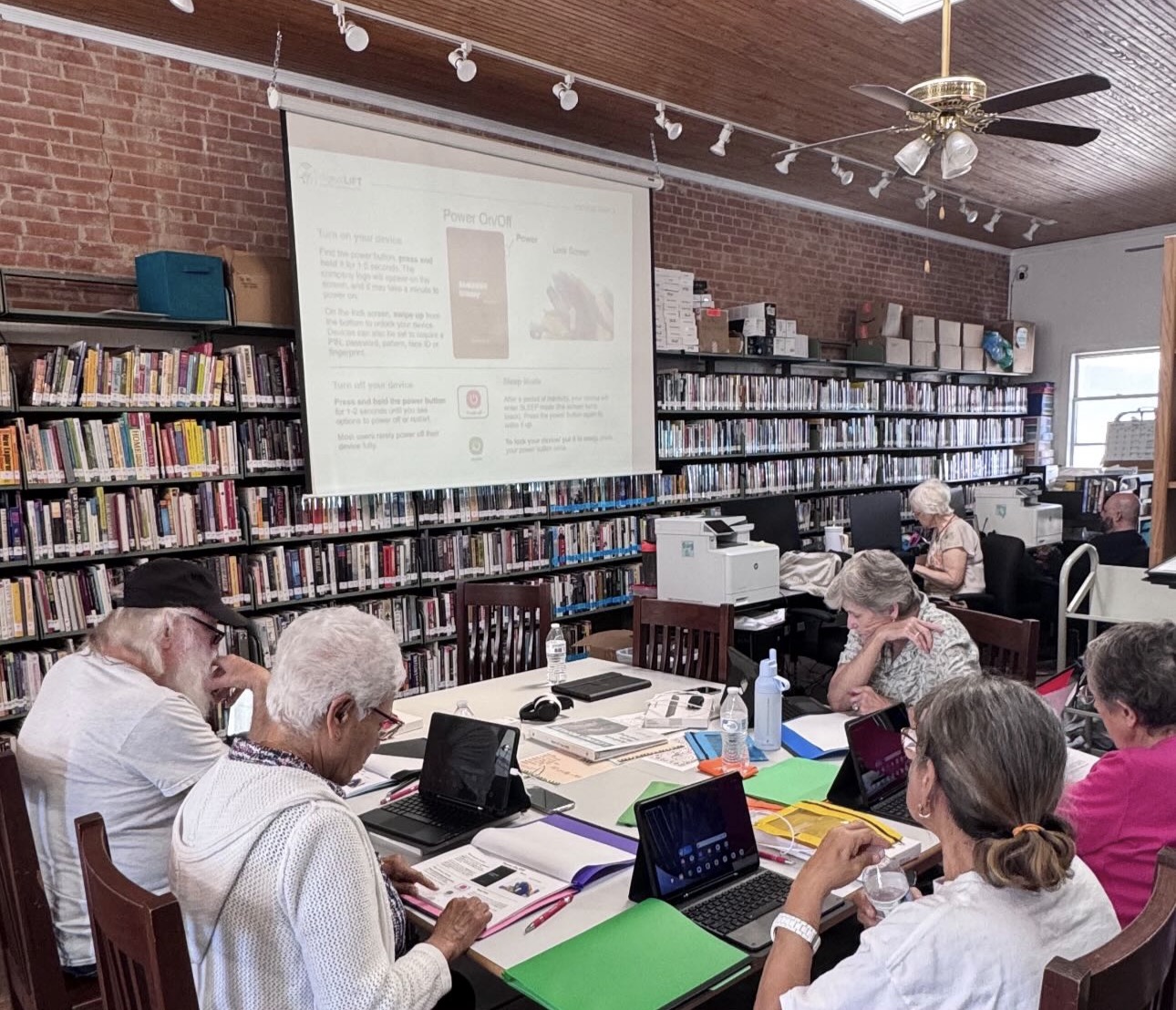
In a community where broadband access has historically lagged behind neighboring metropolitan areas and internet service can be both unreliable and expensive, the library quickly became the community’s technology lifeline.
Through the Texas State Library and Archives Commission’s Texas Digital Navigators grant, the library received tablets, laptops, hotspots, and funding to begin offering digital literacy instruction. Later, a partnership with digitalLIFT expanded those efforts by providing additional tablets and a structured curriculum focused specifically on helping older adults build digital confidence.
Together, those partnerships allowed the library to create a program it never could have developed on its own.
Learning by Doing
Today, the library offers a six-session “Learn to Earn” program where seniors attend weekly classes and earn a tablet to keep upon completion.
But the curriculum is only part of what makes the program successful.
Each class ends with dedicated time for individual questions, allowing participants to get help with real-life problems they’re facing.
Sometimes it’s resetting a forgotten password. Sometimes it’s figuring out why a phone won’t connect to a printer. Other times it’s learning how to recognize online scams or return an Amazon purchase.
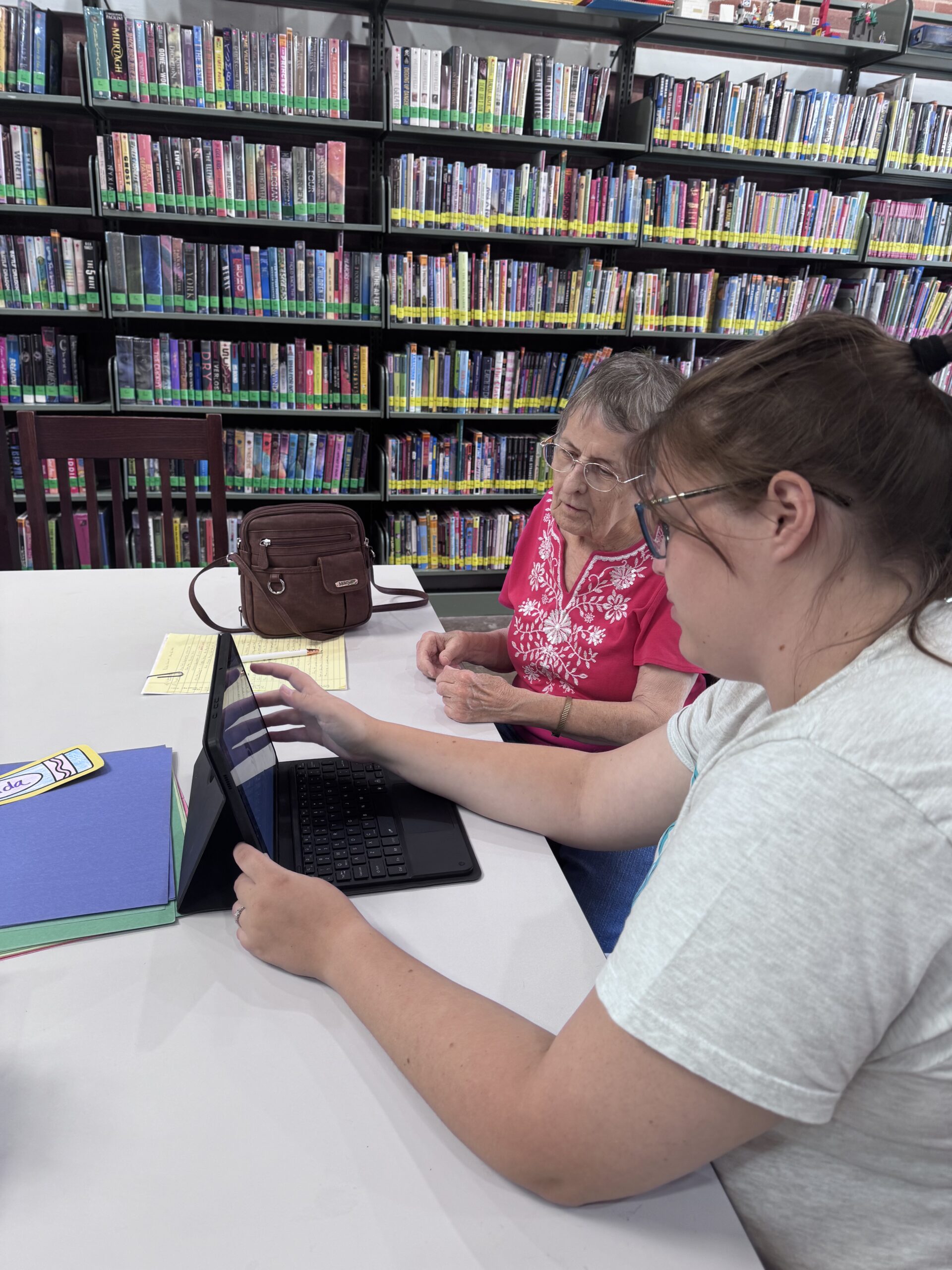
“We ask them, ‘What do you wish we would’ve covered?'” said Programming Coordinator Amanda Traywick. “That helps us shape what we spend time on.”
The classes also reflect an important reality of digital literacy: everyone learns differently.
Amanda grew up with smartphones. Carol began her career using punch cards before eventually becoming a technology trainer and school librarian, teaching the teachers to use the equipment and teaching students how to find information safely. Together, they combine decades of experience with patience and a willingness to learn alongside their patrons.
“It’s meeting people where they are,” Amanda said. “Some know quite a bit, and some know very little. It’s about using language that’s easy to understand and helping them build confidence.”
Confidence Beyond the Classroom
For Carol and Amanda, the biggest success isn’t mastering a device. It’s watching patrons become more independent.
One regular patron, Ms. Harper, initially struggled with something as simple as connecting her phone to the library printer. After working through those challenges during the classes, she became comfortable enough with technology to complete an online job application and interview.
UPDATE: As of the publishing date of this blog, Ms. Harper got the job and came into the library to fill out start paperwork. She passed all the required digital skills tests with confidence thanks to the library!
Stories like hers remind the staff that digital literacy isn’t really about tablets or apps. It’s about opportunity.
Whether that’s accessing healthcare, applying for a job, communicating with family, or simply feeling less intimidated by technology, every new skill opens another door.
Partnerships Amplify a Library’s Impact
Martindale Community Library serves only eight participants at a time because of its limited space. “We only have eight chairs,” Carol said. Yet its impact extends well beyond those classroom walls.
Grant-funded Wi-Fi extenders now provide internet access throughout downtown Martindale. Community organizations, city officials, educators, and residents regularly rely on the library’s internet connection for meetings and remote work. Even the City Hall offices uses the library’s Wi-Fi.
The library hopes to eventually expand its digital literacy efforts through mobile outreach, bringing technology instruction directly to public housing and other community locations.
That vision will almost certainly depend on the same thing that made the current program possible, more partnerships. For libraries considering digital literacy programming, Martindale’s experience offers an encouraging reminder. You don’t have to do everything yourself.
Working with organizations like digitalLIFT, leveraging grant opportunities through the Texas State Library and Archives Commission, and building relationships with local partners can make even the smallest library a powerful force for digital inclusion.
As technology continues to shape everyday life, those partnerships ensure libraries remain what they’ve always been: places where people can learn, grow, and find the help they need.


