The Texas State Library and Archives Commission is made up of four divisions, Library Development and Networking (LDN), State and Local Record Management (SLRM), Archives and Information Services (ARIS), and the Talking Book Program (TBP). For this blog, we wanted to dive deeper into the technology the Talking Book Program uses for their programming and services. Just recently, TBP’s circulating patron devices were upgraded to utilize WiFi and Bluetooth, greatly improving user experience and access.
We reached out to Engagement Specialist Alicia Topolnycky who had this to say, “For more than100 years, the Texas Talking Book Program has redefined what a library can be—but our core mission has remained the same: ensuring that every Texan, regardless of visual, physical, or reading disabilities, has seamless access to the books they love.”
With that mission in mind, and given how long this division has been operating, we wanted to know more about their origins, the evolution of their technology, and the impact their services have for patrons. Here is what we learned from Alicia.
LDO: Tell us about the origins of TBP.
TBP is a regional library of the National Library Service for the Blind and Print Disabled (NLS) in Washington, DC, a program administered by the Library of Congress. TBP was born in 1918, when the Texas Legislature appropriated $1,000 for the State Library to purchase raised-lettering books for visually impaired Texans. By 1931, it became one of the first libraries in a nationwide network through the Pratt-Smoot Act. Over the decades, TBP expanded to serve children, people with physical disabilities, and those with reading disabilities like dyslexia—continually evolving with innovations like digital downloads and mobile apps to keep reading accessible for all Texans.
LDO: Can you talk about the technology that TBP uses?
TBP uses a mix of low-tech and high-tech to make reading accessible.
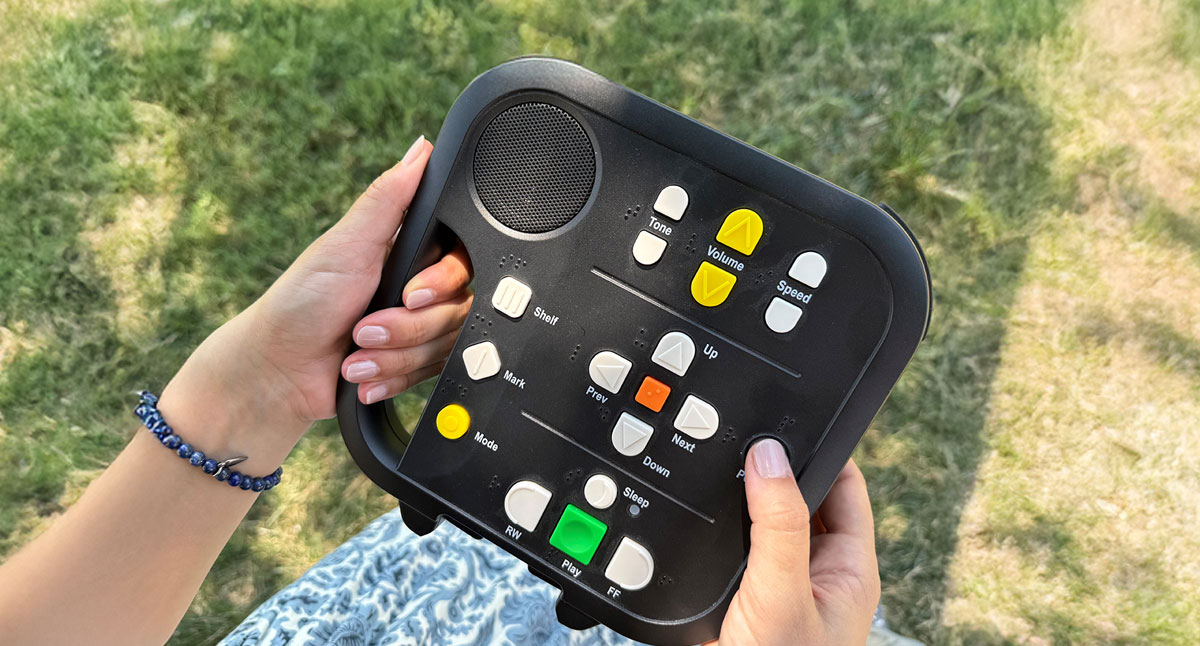
Our Digital Talking Book Machine (DTBM) is a simple, user-friendly player that TBP loans out. Patrons receive books on digital cartridges through the mail, and the DTBM is designed to work even when not connected to the internet.
Behind the scenes, TBP also uses Duplication on Demand (DOD), which means books are copied onto cartridges only when a patron requests them. This allows for faster turnaround, a larger available catalog, and more personalized service without needing to store thousands of pre-made copies.
For patrons who read braille, TBP provides refreshable braille displays, including devices from HumanWare and Zoomax. These devices use small moving pins to form braille characters that update in real time, allowing users to read digital books line by line.
And on the digital side, TBP connects patrons to the BARD (Braille and Audio Reading Download) platform and mobile app, where they can instantly download thousands of audiobooks and braille titles to their phones, tablets, or computers.
Together, these technologies ensure that whether someone prefers physical materials or digital access, TBP can deliver books in a way that truly works for them.
LDO: How does it address the unique needs of the patrons you serve?
The DTBM is easy to use for those with low or no vision, thanks to the braille button labels, large buttons of different shapes and colors, and audio navigation (the buttons announce what they do when you press them). But it’s also ideal for people who are rough with their tech (prone to dropping or breaking), because it’s very sturdy. Parents also love that using the DTBM doesn’t count as screentime because, well, there is no screen. The carrying handle and long battery-life allow all patrons to take the machine on the go.
The refreshable braille displays allow braille readers to carry the ultimate portable library.
Instead of thick, multi-volume braille embossed paper books, patrons can carry one device that’s the size of a Kleenex box (Zoomax) or pocketbook (HumanWare).
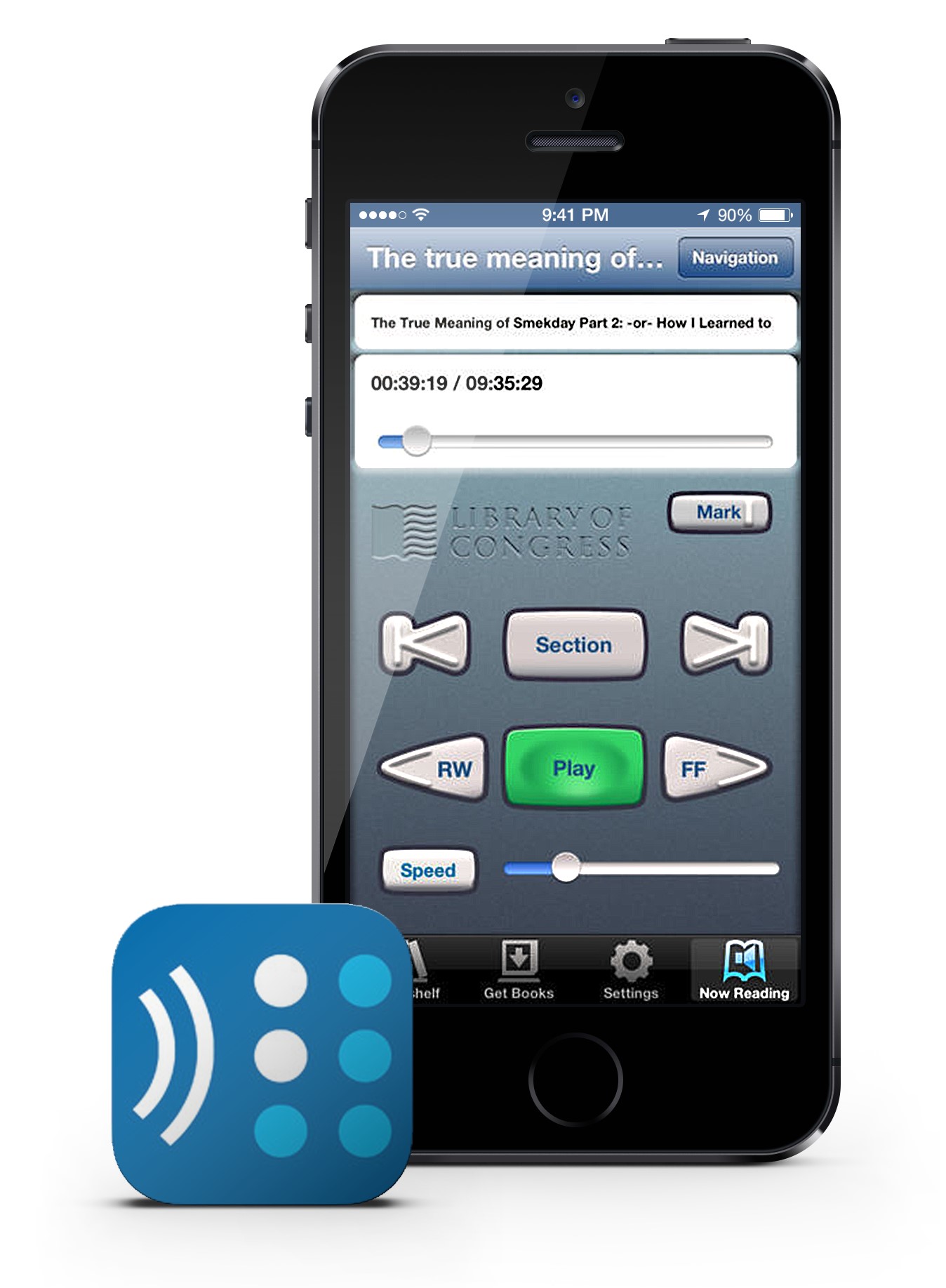
The BARD mobile app makes accessing audiobooks easy for those who already own a smartphone, Chromebook computer, or tablet (from Apple Ipads to Kindle Fire tablets). The app is free to download and has an easy-to-learn interface that looks like the DTBM. People of all ages can understand the large play/stop button and the search bar to find new books.
LDO: How has the technology evolved over the years?
The technology began in the 1930s with phonograph records, where books were recorded on slow-speed discs to maximize listening time. By the late 1960s and 1970s, this shifted to cassette tapes, which were more portable and allowed features like variable speed playback.
In the 1990s and early 2000s, TBP moved into the digital era. Recording became fully digital, improving sound quality and durability, and services like Web-Braille allowed patrons to access braille books online for the first time—no mail required.
A major leap came with the development of the DTBM in the late 2000s. Instead of tapes, books were now stored on flash cartridges, offering better reliability and easier navigation. Around the same time, BARD launched, allowing patrons to download books directly from the internet.
The 2010s brought even more flexibility, with the BARD Mobile app enabling users to read on smartphones and tablets, and the introduction of refreshable braille displays, which let patrons read digital braille in real time.
LDO: How has the recent update to WiFi enabled devices been going?
Patron feedback has been very positive! Patrons appreciate the expanded ability for self-service by searching and downloading books and magazines from BARD 24/7 using either the new DA2 DTBM or the refreshable braille eReader. This is a great option for those patrons who do not have access to a smartphone or tablet, or who prefer the DTBMs. Patrons are also enjoying the new bluetooth connectivity, which allows them to listen to their DA2 over Bluetooth-enabled speakers or headphones!
LDO: What kind of feedback are you getting from librarians who are involved with TBP? Do they find the technology easy to use? How do you troubleshoot issues?
Libraries which become demonstration sites receive a DTBM, two book cartridges (one in English and one in Spanish), and access to BARD. One librarian from a new demo site stated, “I am excited to let people know about your wonderful services, and I’m sure we have plenty of folks in the community who could make use of what you offer.”
There have not been many issues with the technology, and demo site library staff find the technology easy to use. Occasionally, we get questions about downloading and using BARD, but since it is similar to other reading apps available through public libraries, this doesn’t happen often.
If there are any issues, library staff are encouraged to contact TBP. We can assist with tech support right over the phone! Email tbp.services@tsl.texas.gov, fill out this contact form online, or call 1-800-252-9605, Monday through Friday from 8:00 a.m. to 5:00 p.m. (Central).
LDO: Do you tend to see one demographic using your services more than others, or is it pretty evenly spread out?
Currently, approximately 25% of our patrons are under 18 years old (juvenile), and 75% are over 18 years old (adult). However, the number of juvenile patrons grows every year, especially those with reading disabilities like dyslexia.
LDO: What are you excited about in terms of the future of accessibility technology? Are there aspects you would want to include in TBP’s offerings?
I’m excited about all of the new AI and human-powered smart-device apps that are accessibility focused, like Be My Eyes, SeeingAI, and TapTapSee.
One idea I’ve always found interesting, though it’s not something TBP or NLS plans to offer, is a karaoke-style visual feature within the BARD Mobile app. In theory, this would display text on screen and highlight each word in sync with the audiobook narration.
Features like this can be especially helpful for some readers with dyslexia, as they support word recognition, pacing, and comprehension by pairing audio with visual tracking.
To be clear, this is simply a personal “what if” idea rather than a planned or proposed feature. BARD Mobile is intentionally designed with a simple, intuitive interface, specifically aiming to mirror the straightforward, button-based experience of the DTBM. This consistency helps ensure that patrons can move between devices with ease and confidence.
If the karaoke-style visual feature is something that intrigues you, check out the apps Learning Ally Audiobooks and Bookshare Reader, which currently offer this feature!
LDO: How do users typically find out about the Talking Book Program?
Patrons typically learn about TBP through a mix of personal recommendations, community connections, and targeted outreach. Many hear about it from their local library (some of which are officially designated as TBP “‘”demonstration sites”’”), their school, their senior center, or their doctor. TBP has a dedicated team of engagement specialists who set up booths and tables at expos and information fairs across the state to get the word out. This team also hosts many virtual outreach events throughout the year. And, many patrons hear about the program through word-of-mouth: their friends or family members are already signed up and love the program.
LDO: Are there tools you’ve been curious about but haven’t had time to explore?
One tool I’ve been especially curious to explore more is the “My Talking Books” Alexa skill from NLS.
It allows patrons to access and stream BARD audiobooks entirely through voice commands. There is no need for screens, downloads, or navigating apps. Users can search the catalog, manage wish lists, adjust reading speed, and pick up where they left off, all by simply speaking to a smart speaker.
What excites me about it is how it pushes accessibility even further, especially for patrons who may have limited mobility, low tech confidence, or prefer a completely hands-free experience. It feels like a natural next step in reducing barriers to reading.
I have not had as much hands-on time with it yet, but I am very interested in exploring how it could fit into outreach and training, especially as voice-first technology becomes more common in people’s homes.

