
With Summer Library Program in the review mirror, you can practically hear the thrum of those yellow limousines, taste the cafeteria‘s food service delights, and smell the essential oils of fresh pencil shavings mingling with melted crayons. And now that it’s back to school season, learning and reflection are top of mind.
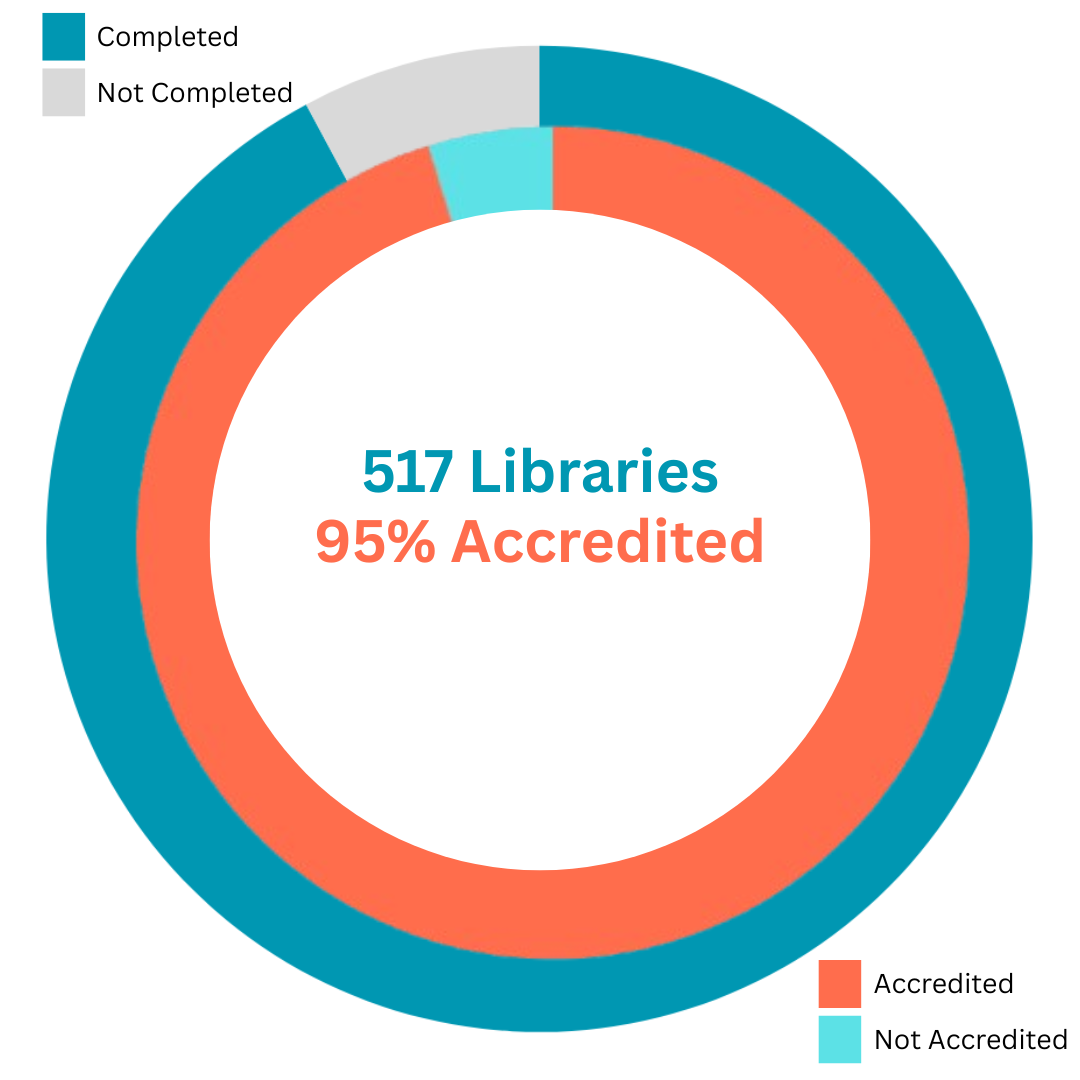
As the young summer patrons leave your stacks and seats for their campus libraries, here’s some arithmetic for YOU. From 561 invitations, 517 libraries completed the Texas Public Libraries Annual Report for local fiscal year 2024. Of those, 95% met the minimum standards for accreditation. They will be accredited for State fiscal year 2026, starting September 1.
Every year, public libraries across the state take part in a process that goes far beyond simply “checking a box.” Accreditation with the Texas State Library and Archives Commission (TSLAC) is more than a status—it’s a statement. It signifies that a library is meeting key standards, staying accountable to the community, and positioning itself for growth and opportunity.
Accredited libraries have access to important benefits: eligibility for the statewide interlibrary loan (ILL) program, a variety of funding opportunities through TSLAC, the TexShare Card and TexShare Databases programs, and E-rate—a federal telecommunications discount program. Furthermore, simply submitting an Annual Report allows libraries to have access to E-Read Texas—a curated e-book program—as well as free Summer Library Program materials. More information can be found in this Benefits of Accreditation document.
But the value of accreditation isn’t just about what it unlocks; it’s also about what it reveals— opportunities for increased credibility with decision-makers and the public.
Completing the annual report, a central requirement for accreditation, invites library leaders to pause and reflect. It’s a rare chance to step back from the day-to-day whirlwind and see the bigger picture: the programs that are thriving, the services that are reaching more patrons, and the areas where improvement is possible. This reflection helps shape strategic planning, strengthens advocacy efforts, and ensures the library is making informed choices for the future.
And here’s where the magic really happens—data storytelling. The statistics and trends captured in your annual report aren’t just numbers; they’re the backbone of compelling stories about your library’s impact. Whether it’s presenting to your city council, writing a grant proposal, or connecting with community partners, weaving your data into narratives helps stakeholders see your library’s value in concrete, relatable ways. Done well, it can transform a budget conversation into an investment conversation.
Picture this… While attending the annual trunk-or-treat, you noticed your new city council member chatting with some neighbors and took the opportunity to introduce yourself. Fortunately, you’d previously done your homework and were well aware that social services and quality of life are among his top priorities. Thus, your personal introduction and description of the library as a critical hub for community resources not only sparked his interest but also secured a spot on his calendar for a more detailed explanation. So, now it’s time to support this bold claim with data from the annual report.

Accreditation is not a mere compliance measure—it’s a confidence-building process and a launchpad for advocacy. TSLAC has published Texas public library statistics from 1996 through 2023, along with training decks on how to use them effectively. So, once your annual report is complete, don’t just let the data sit on a shelf!
Collecting data is one thing—but using it to make a compelling case for your library’s value to funders, city leaders, and community partners is where the real power lies. Every number tells a story about the people you serve, the resources you provide, and the difference you make. Turn those numbers into narratives, and you turn information into influence.
***
Need to build your skills and confidence? Explore the “Tips and Tools” documents on TSLAC’s Annual Report webpage for guidance, or take a deeper dive into key topics with the slide decks Financial Sections of the Annual Report, Maintenance of Effort (MOE) Explained, and Program Reporting Explained. Then, start using your statistics as one of your strongest tools for library advocacy.

If you’re in need of a thought partner as you strategize how to leverage your annual report data when talking to key stakeholders, don’t hesitate to reach out. Email our Accreditation team at accreditation@tsl.texas.gov.

