Disposition of records is a common and essential task among Records Management Officers (RMOs). However, at some point, RMOs will encounter the difficult task a step above regular disposition: getting rid of records that have been stashed away for decades. Nobody knows the content of the boxes or electronic files, and those who made them have long since left their job. Sometimes RMOs deal with records created before they were born and relate to obscure tasks their entity no longer handles. It’s a project that many fear to start and that often begins by contacting their RMA analyst.
Despite the frequency and necessity of this task, as analysts, we rarely conduct large dispositions of mysterious records ourselves. Your RMA analyst has read the laws, conducted training on the topic, and provided advice about disposition on a weekly, if not daily, basis for local governments and state agencies. However, we typically only experience disposition at small and often personal levels. As analysts, we sat content with the knowledge that we didn’t have to conduct complicated dispositions of records we didn’t create. Until we did.
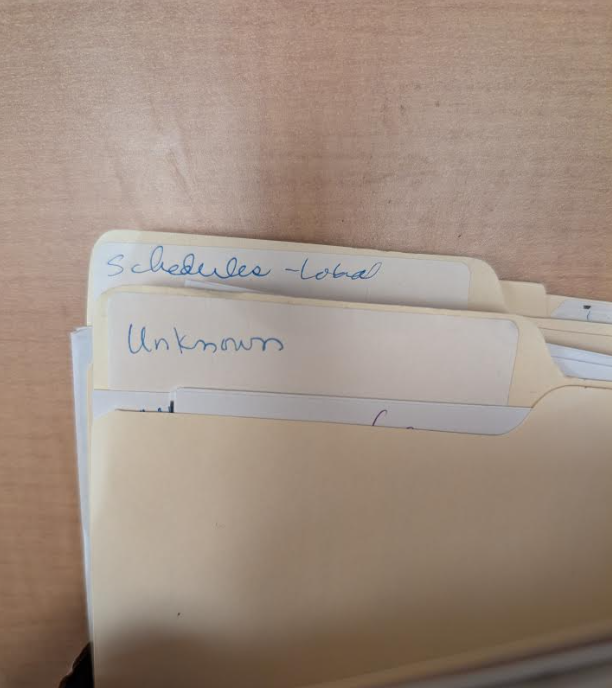
As part of an agency-wide effort to clear out clutter, we decided to tackle a large filing cabinet that was taking up valuable real estate in our office. Like most acts of records management, the road was paved with Excel sheets and good intentions. Thanks to a predecessor who helpfully labeled the files, such as “Schedule Development: UT,” some were easy to decipher. Other folder names were not nearly as useful (Fig. 1).
What is It?
Our first order of business was to conduct an inventory of the files. First, we took them out of the filing cabinet and put them in boxes, careful to maintain the order they were in originally. We ended up with about twenty-seven cubic feet of records (give or take a foot due to my contentious relationship with math). Next, we dispersed the boxes between all the analysts and determined what types of records we were dealing with. After going through the files and some discussion, we were able to determine that most of the records had met retention. These were mostly old schedule development files for our Local Government Schedules from the 1990s, along with copies of laws and other reference materials used to create the schedules.
Seeking Archival Review
Although they had met retention, some of these records merited review by TSLAC’s Archives Division, which was helpfully denoted by the “R” in the Archival Code column of our retention schedule. This is a unique column for state agencies that tells them if their records need to be reviewed by the Archives division prior to disposition.[1] We followed the steps outlined by TSLAC’s Archives Division and sent in our sample documents and description of the records we were dealing with for review. While some analysts were tasked with solving these riddles, others filled out disposition logs for the records that fell under other series without an archival code. All of this took several dedicated days to start and many weeks to sift through and appraise the 20th century records.

Conclusion
After all this, we successfully disposed of some boxes, but there are still a couple of them haunting our office as we determine their value, whether it be sentimental (Fig. 2), or practical as useful reference materials. Despite dealing with a fraction of the records some RMOs have to review and dispose of, this experience impressed upon the RMA team the many difficulties faced by government entities attempting to dispose of records that haven’t seen the light of day in years.
[1] Note that local government schedules do not have an archival code column because local governments do not need to send their records to TSLAC for archival appraisal. If a local government determines that they have historically important records, they can contact their analyst to point them to resources and institutions that can appraise and, if agreed to, transfer ownership and keep the record in their archives.


